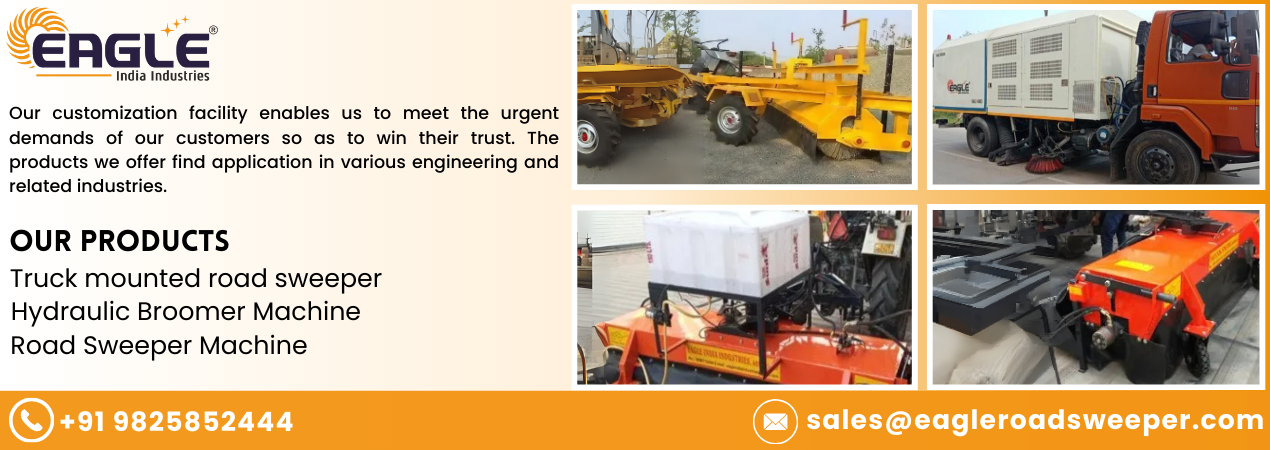
Introduction to Municipal Road Sweeper
Municipal road sweeper machines are designed to keep city streets, commercial zones, residential lanes, and public spaces clean with consistent, repeatable performance. Urban routes face mixed debris like dust, plastic waste, leaves, sand, and fine particles from daily traffic. A municipal road sweeper helps local bodies maintain road hygiene, reduce airborne dust, and support safer driving and walking conditions. These sweepers are commonly used for street cleaning drives, routine ward-level maintenance, and cleanliness initiatives across towns and cities. For model options and application guidance, visit the official Eagle Roadsweeper website.
Working Principle and Process Flow of Municipal Road Sweeper
A municipal road sweeper generally uses side brooms to move debris from kerbs, edges, and corners into the sweeping path. The main broom then gathers material, and depending on the configuration, debris is either mechanically conveyed into a hopper or vacuumed through a suction system. Water spray nozzles help reduce dust during sweeping, while filtration systems capture fine particles in vacuum sweepers. The overall process is optimized for frequent stop-and-go city routes, tight turns, and variable road surfaces. Explore municipal-ready configurations through the Eagle Roadsweeper portal.
Types of Municipal Road Sweeper
- Truck-mounted mechanical broom sweepers for daily city road cleaning with efficient pickup for mixed debris and long ward routes.
- Truck-mounted vacuum road sweepers for fine dust control in urban areas, flyovers, and high-traffic corridors.
- Compact sweepers for narrow lanes, markets, internal roads, and areas with tighter turning requirements.
- Combination sweepers with broom plus suction for mixed debris conditions, balancing heavy pickup with dust control.
- Water-spray dust control sweepers for dry zones, construction-adjacent areas, and routes requiring reduced airborne dust.
Key Features and Specifications of Municipal Road Sweeper
- Optimized sweeping width for city lanes and main roads, supporting quicker route completion and consistent coverage.
- High-efficiency dust suppression with water spray and optional filtration to help maintain better urban air quality.
- Hopper and unloading design suited for municipal operations, reducing downtime between collection and disposal.
- Durable broom assemblies and reliable drive systems built for continuous stop-start sweeping cycles.
- Operator-friendly controls, visibility, and safety features designed for working near pedestrians and mixed traffic.
Applications of Municipal Road Sweeper
- City streets and main roads use municipal sweepers for routine cleaning to maintain road hygiene and improve public comfort.
- Market areas and commercial zones deploy sweepers to remove litter, dust build-up, and organic waste from daily activity.
- Residential colonies and internal roads use compact sweepers for tight lanes, corners, and frequent housekeeping routes.
- Flyovers, bridges, and ring roads use vacuum sweepers for fine dust control and cleaner high-traffic surfaces.
- Bus depots, municipal yards, and public infrastructure areas use sweepers to keep operational zones clean and safer for movement.
Benefits of Using Municipal Road Sweeper
- Improves cleanliness standards by removing dust, litter, and loose debris from streets and public spaces consistently.
- Supports safer roads by reducing skidding risks and improving visibility by controlling dust on busy routes.
- Reduces manual cleaning effort and helps municipalities cover larger areas efficiently with planned routes.
- Helps maintain better surroundings by preventing drain blockage from silt and debris accumulation near kerbs.
- Supports organized waste handling by collecting debris into a hopper for controlled disposal and cleaner operations.
Top Manufacturers and Suppliers in India
Municipal road sweeper selection depends on road width, route length, debris mix, and dust control requirements. Reliable suppliers offer mechanical broom, vacuum, and combination sweepers with water spray systems suitable for city operations. Before finalizing a municipal road sweeper, it is useful to review sweeping coverage, hopper capacity, filtration support, service reach, and spare parts availability. Many manufacturers also provide operator training, route guidance, and preventive maintenance support to keep machines reliable across daily municipal cycles. A structured selection approach helps match the sweeper to real urban working conditions and long-term maintenance expectations.
Maintenance and Safety Tips
- Inspect side brooms, main broom wear, and brush angles regularly for consistent pickup on varying city road surfaces.
- Clean filters, suction lines, hoppers, and water spray nozzles on schedule to maintain dust control and suction efficiency.
- Check hydraulic hoses, seals, and fittings frequently to prevent leaks and ensure smooth daily route operations.
- Follow safe sweeping practices near pedestrians, parked vehicles, and mixed traffic, using proper indicators and route planning.
- Maintain a preventive service routine and keep essential spares ready to reduce downtime during municipal operations.
FAQs – Municipal Road Sweeper
Contact Details
Talk to our specialists today for tailored solutions and fast assistance.