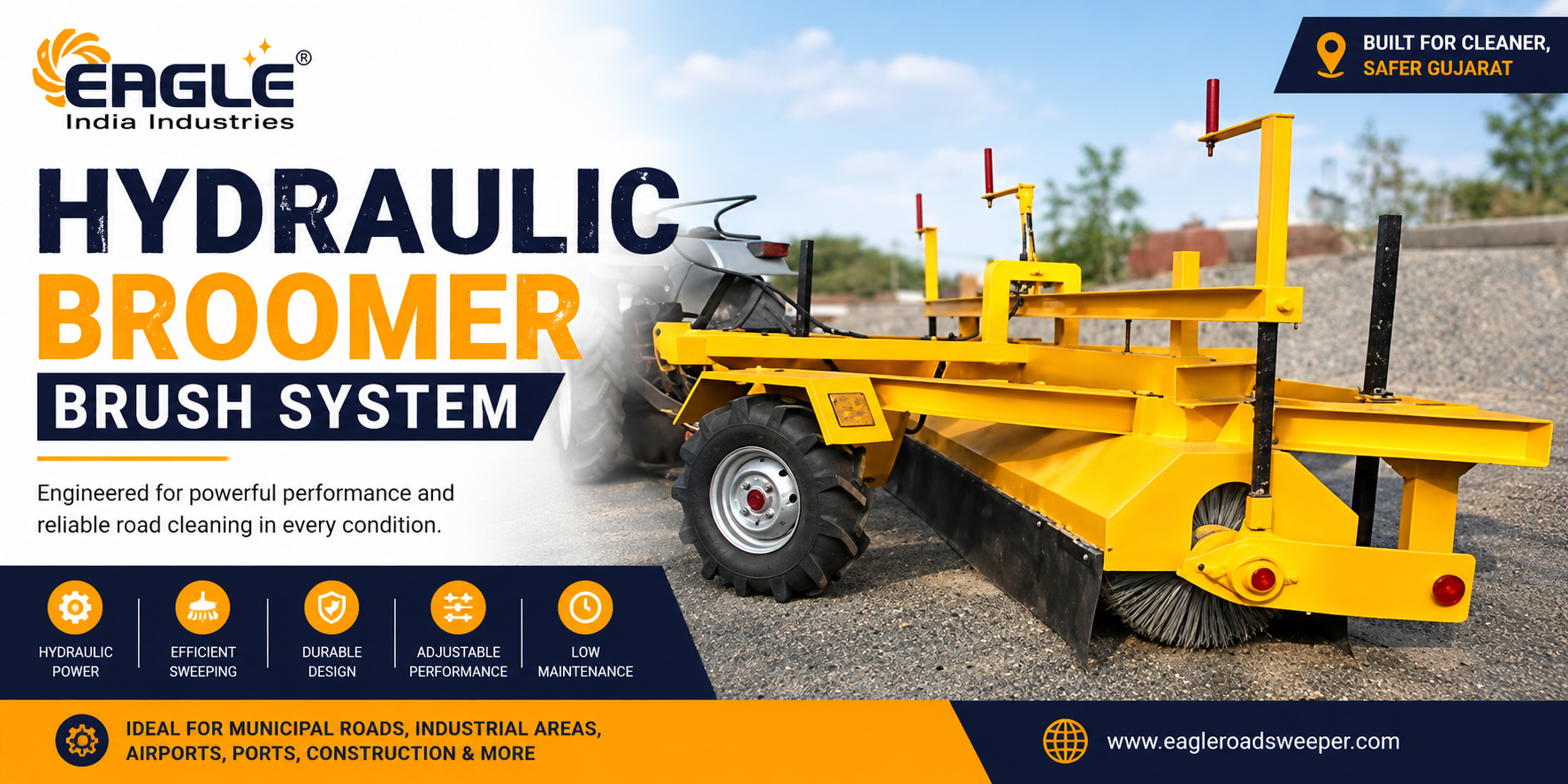
Hydraulic Broomer Brush System
Expert guide to Hydraulic Broomer Brush Systems for efficient road cleaning in Gujarat. Learn about features, applications, and choosing the right system from E
Why This Matters in Gujarat
Gujarat's dynamic economic landscape, characterized by bustling industrial zones, expanding cities, and extensive transportation networks, places a significant demand on road maintenance. From the high-traffic corridors of Ahmedabad and Surat to the industrial hubs of Vadodara and Rajkot, effective debris removal is essential for public safety, environmental health, and the smooth flow of commerce. A robust hydraulic broomer brush system ensures that these vital arteries remain clear of dust, gravel, and other road contaminants, supporting the state's continued growth and development.
What is a Hydraulic Broomer Brush System — Overview
A hydraulic broomer brush system is the primary cleaning mechanism on a road sweeping vehicle. It consists of rotating brushes, typically made of durable materials like polypropylene or steel bristles, driven by a hydraulic motor. This system is designed to sweep debris from the road surface into the collection path of the sweeper's vacuum or collection system. The hydraulic power allows for adjustable brush speed and pressure, enabling the system to adapt to various road conditions and types of debris, from fine dust to larger gravel.
Key Features and Technical Specifications
- Brush Diameter and Length: Varies based on the sweeper model and application, impacting sweeping width and debris collection capacity.
- Bristle Material: Options include polypropylene for general sweeping, steel for heavy-duty debris, or a combination for versatility.
- Hydraulic Motor Power: Determines the torque and speed of the brush rotation, crucial for effective debris agitation and removal.
- Adjustable Brush Speed: Allows operators to fine-tune rotation based on road surface and debris type, optimizing cleaning efficiency and minimizing wear.
- Variable Brush Angle and Pressure: Enables adaptation to different road contours and stubborn debris, ensuring thorough cleaning.
- Durable Construction: Built with robust materials to withstand harsh operating environments and continuous use.
- Quick-Change Mechanism: Facilitates faster brush replacement, reducing downtime during maintenance.
Industrial Applications and Use Cases
- Municipal Road Cleaning: Sweeping city streets, highways, and public spaces to remove litter, dust, and general debris.
- Airport Runway Maintenance: Clearing runways and taxiways of debris that could pose a hazard to aircraft.
- Construction Site Cleanup: Removing dust, aggregate, and construction waste from roads surrounding active sites.
- Industrial Facility Sweeping: Cleaning large paved areas in factories, warehouses, and logistics centers.
- Port and Harbor Operations: Maintaining cleanliness in busy port areas to ensure efficient cargo handling.
- Mining and Quarry Operations: Clearing access roads and operational areas of loose material.
- Highway Maintenance: Removing road debris, sand, and salt from major transportation routes.
How to Choose the Right Hydraulic Broomer Brush System
Selecting the appropriate hydraulic broomer brush system is critical for operational success. Consider these factors:
- Application Requirements: What type of debris will you primarily be sweeping (fine dust, gravel, wet leaves)? This dictates bristle material and brush strength.
- Sweeper Vehicle Compatibility: Ensure the brush system's dimensions and hydraulic requirements match your existing road sweeper.
- Sweeping Width Needed: Determine the required width to cover your operational areas efficiently, impacting the number and size of brushes.
- Durability and Lifespan: Look for robust construction and high-quality materials that can withstand demanding conditions and offer a good return on investment.
- Ease of Maintenance: Consider systems with features like quick-change mechanisms to minimize downtime.
- Supplier Support: Evaluate the availability of spare parts, technical assistance, and after-sales service.
- Environmental Conditions: Factor in local climate and road conditions (e.g., frequent rain, dusty environments) when choosing bristle type and system robustness.
Quality Standards and Compliance
When procuring a hydraulic broomer brush system, verifying adherence to relevant quality standards is essential. While specific standards for brush systems can vary, the overall road sweeping equipment often aligns with national and international norms for industrial machinery. Look for manufacturers who demonstrate a commitment to quality through certifications like ISO 9001 for quality management systems. Furthermore, ensure that the materials used, particularly for bristles, meet durability and safety requirements suitable for their intended application. Reputable suppliers will readily provide documentation regarding their manufacturing processes and material sourcing.
Why Eagle India Industries' Experience and Capability Matters
At Eagle India Industries, our establishment in 2019 as a dedicated manufacturer of road sweeper machines, including advanced hydraulic broomer brush systems, is built on a foundation of practical engineering and a deep understanding of our clients' needs. Our proprietor, Mr. Nikhil Patel, guides our operations with a focus on delivering reliable and efficient cleaning solutions tailored for the Indian industrial landscape. We pride ourselves on our manufacturing process, which emphasizes robust construction and performance-driven design, ensuring our systems can handle the demanding conditions prevalent in Gujarat and across the nation.
Our technical capability allows us to offer systems that are not only effective but also adaptable. We understand that each operational environment presents unique challenges, which is why we focus on providing solutions that offer versatility in bristle types and operational adjustments. This commitment extends to our quality control, where each component is inspected to ensure it meets our stringent standards before it leaves our facility. By choosing Eagle India Industries, you are partnering with a company dedicated to enhancing your road cleaning efficiency through dependable, well-engineered equipment and responsive support.
Installation, Maintenance, and Care Tips
Proper installation and regular maintenance are key to maximizing the lifespan and performance of your hydraulic broomer brush system. Ensure that the system is installed by qualified technicians who understand the hydraulic connections and mounting requirements specific to your road sweeper. During operation, monitor brush wear and adjust speed and pressure as needed to prevent premature degradation.
Regular cleaning of the brushes and the surrounding housing will prevent debris buildup that can impede performance. Inspect hydraulic lines for leaks and ensure fluid levels are maintained according to the manufacturer's recommendations. When brushes reach the end of their service life, replace them promptly to maintain sweeping efficiency and prevent damage to other system components. Following these practices will ensure your hydraulic broomer brush system operates reliably for years to come.
Frequently Asked Questions
The primary function of a hydraulic broomer brush system is to agitate and sweep debris from road surfaces into the collection path of a road sweeper. Driven by hydraulic power, these rotating brushes are essential for lifting dust, gravel, leaves, and other contaminants, making them ready for vacuuming or direct collection.
The correct bristle material depends on the type of debris you typically encounter. Polypropylene bristles are ideal for general sweeping of fine dust and light debris, while steel bristles are more effective for heavy-duty tasks like removing compacted dirt, gravel, or stubborn road residues. A combination of both can offer versatility.
The lifespan of a hydraulic broomer brush can vary significantly based on usage intensity, the type of debris swept, operating conditions, and maintenance practices. With proper care, regular inspection, and appropriate operational settings, brushes can last from several hundred to over a thousand operating hours.
It is recommended to inspect the hydraulic components, including hoses, fittings, and fluid levels, at least weekly or after every 40 hours of operation. Daily visual checks for leaks or obvious damage are also advisable to catch potential issues early and prevent system failures.
Yes, hydraulic broomer brush systems can be used effectively in wet conditions. In fact, some brush materials and configurations are specifically designed to handle wet sweeping, helping to clear away mud, wet leaves, and other debris that accumulates during rainy seasons.
The hydraulic motor requires regular checks for fluid leaks and proper lubrication. Ensuring the hydraulic fluid is clean and at the correct level is crucial for its longevity. Following the manufacturer's specific maintenance schedule for the motor, including any filter changes, is essential.
Conclusion
For effective road cleaning and maintenance in Gujarat's demanding environments, a high-performance hydraulic broomer brush system is indispensable. Understanding the technical specifications, application suitability, and quality standards associated with these systems empowers you to make informed decisions. Eagle India Industries is committed to providing robust, reliable, and efficient hydraulic broomer brush systems, backed by our manufacturing expertise and dedication to customer satisfaction. Choosing the right system, coupled with diligent maintenance, ensures cleaner roads and more efficient operations for your organization.
Get In Touch
Eagle Roadsweeper / Eagle India Industries