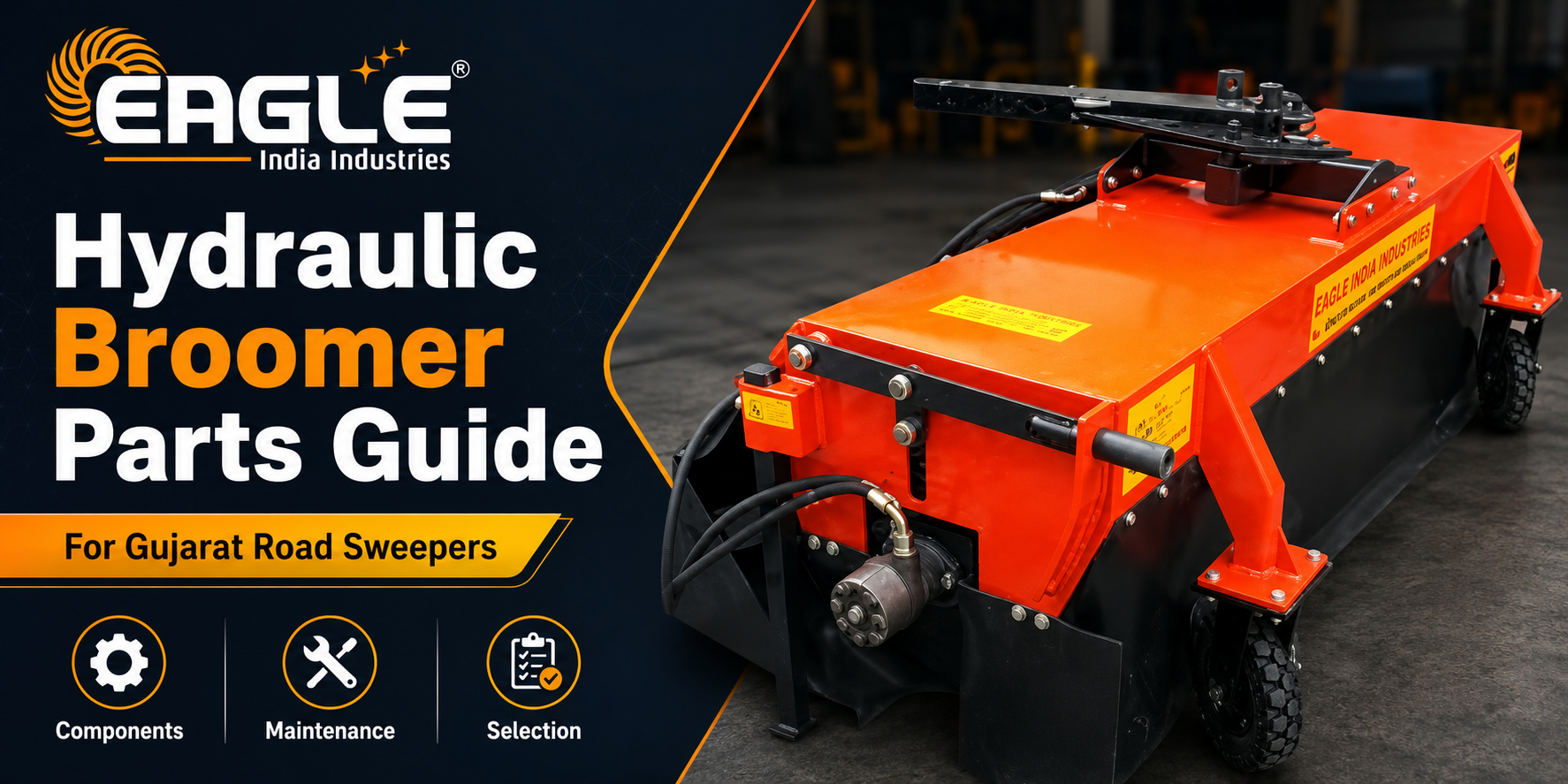
Ride On Sweeper Maintenance Guide
Essential ride on sweeper maintenance guide for Gujarat businesses. Learn how to optimize performance and extend lifespan with Eagle India Industries.
Ride On Sweeper Maintenance Guide for Gujarat Industries
The efficiency and longevity of your industrial cleaning equipment directly impact operational costs and workplace safety. For businesses in Gujarat, where industrial activity is robust, maintaining a fleet of ride-on sweepers is crucial. Neglecting regular maintenance can lead to unexpected breakdowns, reduced cleaning performance, and costly repairs. This guide provides essential insights into keeping your ride-on sweepers in optimal condition.
Why This Matters in Gujarat
Gujarat's dynamic industrial landscape, encompassing manufacturing hubs, ports, and large commercial complexes, relies heavily on efficient cleaning solutions. Maintaining a clean and safe environment is not just about aesthetics; it's a critical factor for productivity and regulatory compliance. For businesses operating in diverse sectors across Gujarat, from automotive to pharmaceuticals, a well-maintained ride-on sweeper ensures uninterrupted operations and a professional image.
What is a Ride On Sweeper? — Overview
A ride-on sweeper is a powerful, self-propelled industrial cleaning machine designed for large areas. Operators sit on the machine and control its movement and cleaning functions. It typically uses rotating brushes to sweep debris into a collection hopper. These machines are engineered to handle dust, dirt, and larger particles efficiently, making them indispensable for warehouses, factories, parking lots, and large public spaces.
Key Features and Technical Specifications
- Adjustable Brush Pressure: Allows for optimal cleaning on various floor surfaces and debris types.
- Large Capacity Hopper: Minimizes the frequency of emptying, increasing operational efficiency.
- Powerful Suction System: Captures fine dust and debris effectively, improving air quality.
- Ergonomic Operator Seat: Designed for comfort during extended operational periods.
- Durable Construction: Built with robust materials to withstand demanding industrial environments.
- Efficient Filtration System: Captures microscopic particles, preventing their release into the atmosphere.
- Variable Speed Control: Enables precise maneuverability in tight spaces and efficient coverage of open areas.
Industrial Applications and Use Cases
- Manufacturing Plants: Maintaining clean production floors to prevent contamination and ensure worker safety.
- Warehousing and Logistics: Keeping large storage areas free of dust and debris for efficient inventory management.
- Automotive Dealerships and Workshops: Cleaning expansive showrooms and service bays.
- Airport Hangars and Terminals: Managing large volumes of dust and debris in high-traffic areas.
- Large Retail Complexes and Malls: Ensuring clean and inviting public spaces for shoppers.
- Power Plants and Industrial Facilities: Maintaining operational areas free from hazardous particulate matter.
- Construction Sites (Post-Construction): Clearing residual dust and debris after project completion.
How to Choose the Right Ride On Sweeper
Selecting the appropriate ride-on sweeper is a critical decision for any industrial operation. Consider these factors to ensure you invest in a machine that meets your specific needs:
- Area Size and Type: Evaluate the square footage you need to cover and the nature of the surfaces (e.g., concrete, epoxy, asphalt).
- Debris Type: Determine the kind of waste you typically encounter – fine dust, coarse debris, or a mix.
- Power Source: Decide between battery-powered for emissions-free operation or engine-powered for longer runtimes in specific environments.
- Maneuverability Requirements: Assess if you need a compact model for tight spaces or a larger unit for open areas.
- Hopper Capacity: Consider how often you can afford to stop for emptying; larger hoppers mean less downtime.
- Filtration Standards: For environments with strict air quality requirements, look for advanced filtration systems.
- Ease of Maintenance: Choose a machine with accessible components for routine checks and repairs.
- Supplier Support: Investigate the availability of spare parts, technical assistance, and after-sales service.
Quality Standards and Compliance
When procuring industrial cleaning equipment like ride-on sweepers, adherence to quality standards is paramount. Look for manufacturers who comply with relevant Indian Standards (IS) and international certifications such as ISO 9001 for quality management systems. These certifications indicate a commitment to consistent product quality, reliable performance, and robust manufacturing processes. Verifying that the sweeper's components meet industry-specific safety and performance benchmarks ensures it will operate effectively and safely in your industrial setting.
Why Eagle India Industries' Experience Matters
With over 12 years of dedicated experience in manufacturing industrial cleaning solutions, Eagle India Industries understands the unique challenges faced by businesses in Gujarat. Our expertise is built on a foundation of continuous innovation and a deep understanding of operational requirements. We focus on robust engineering, utilizing high-quality materials to ensure our ride-on sweepers deliver exceptional performance and durability. Our manufacturing processes are refined to guarantee consistency, and our technical team possesses the in-depth knowledge to design and build machines that meet stringent industrial demands.
This commitment extends to our quality control, where every machine undergoes rigorous testing before it leaves our facility. We pride ourselves on our ability to offer customized solutions and reliable after-sales support, ensuring our clients in Gujarat and beyond receive equipment that not only meets but exceeds their expectations. Our long-standing trust within the industry is a testament to our unwavering dedication to customer satisfaction and product excellence.
Installation, Maintenance and Care Tips
Proper installation and consistent maintenance are key to maximizing the lifespan and performance of your ride-on sweeper.
- Initial Setup: Ensure the machine is set up according to the manufacturer's manual. Check tire pressure, fluid levels (if applicable), and battery charge before the first use.
- Daily Checks: Before each operation, visually inspect brushes for wear or damage, check the dust filter, and ensure the hopper is clear.
- Brush Maintenance: Regularly inspect brushes for embedded debris and wear. Rotate or replace them as needed to maintain optimal sweeping performance.
- Filter Cleaning: Clean or replace the dust filter regularly, especially in dusty environments, to maintain suction power and air quality.
- Hopper Management: Empty the hopper promptly after each use or when it reaches capacity to prevent strain on the machine.
- Battery Care (for electric models): Follow recommended charging procedures to prolong battery life. Avoid deep discharges and extreme temperatures.
- Lubrication: Periodically lubricate moving parts as specified in the operator's manual to ensure smooth operation and prevent wear.
- Scheduled Servicing: Adhere to the manufacturer's recommended service schedule for professional inspections and preventative maintenance.
Frequently Asked Questions
The lifespan of main brushes varies significantly based on usage frequency, the type of debris being swept, and the floor surface. A general guideline is to inspect them weekly and consider replacement when the bristles are worn down by approximately 30-40% or if you notice a decline in sweeping effectiveness.
The dust filter is crucial for capturing fine particles and preventing them from being recirculated into the air. A clean filter ensures optimal suction power, improves air quality in the operating environment, and protects the machine's internal components from dust ingress, thereby extending its operational life.
Most industrial ride-on sweepers are designed for dry sweeping applications. Operating them on wet surfaces can damage the brushes, motor, and electrical components, and may lead to ineffective debris collection. Always check your sweeper's specifications and consult the manual before attempting to use it in damp conditions.
Signs include a noticeable decrease in suction power, unusual noises during operation, brushes not spinning correctly, difficulty in maneuvering, or frequent overheating. Any performance degradation or operational anomaly warrants a professional inspection to prevent further damage.
To maximize battery life, ensure you fully charge the battery after each use, avoid partial charging cycles, and do not leave the battery in a discharged state for extended periods. Also, operate the sweeper within its recommended temperature range and ensure all components are properly maintained to reduce the load on the motor.
Side brushes are designed to sweep debris from edges, corners, and along walls into the path of the main broom. They are essential for achieving a comprehensive clean, ensuring that dirt and dust accumulated in hard-to-reach areas are effectively collected by the sweeper's primary system.
Conclusion
Investing in a quality ride-on sweeper and adhering to a diligent maintenance schedule are fundamental for efficient industrial operations in Gujarat. By understanding the core functions, choosing the right equipment, and implementing consistent care practices, you can ensure your cleaning machinery performs optimally, contributes to a safer work environment, and provides long-term value. Eagle India Industries is committed to supporting your operational needs with reliable equipment and expert guidance.
Get In Touch
Eagle Roadsweeper / Eagle India Industries