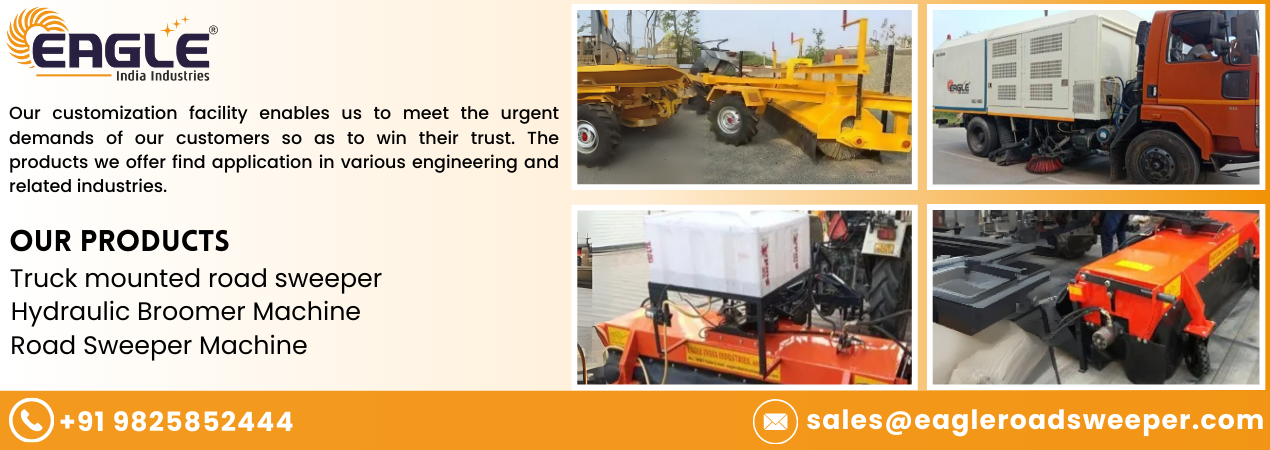
Introduction to Road Sweeping Machine
A road sweeping machine is an engineered cleaning system that removes dust, debris, leaves, and construction waste from paved surfaces. In India, municipalities, industries, and infrastructure contractors rely on tractor-mounted, truck-mounted, and compact walk-behind sweepers to maintain cleanliness, reduce PM emissions, and improve road safety. Key purchase factors include sweeping width, hopper capacity, filtration efficiency, water spray for dust suppression, and after-sales support. Explore proven solutions and request demos on the official Eagle Roadsweeper website.
Working Principle and Process Flow of Road Sweeping Machine
Most machines use either a mechanical broom, vacuum suction, or a hybrid system. A rotating brush (PTO- or hydraulically-driven) sweeps debris toward a conveyor or suction nozzle. A high-capacity fan creates negative pressure to lift fine dust into a hopper via multi-stage filtration. Water spray lines suppress airborne particles and protect filters. Operators control brush pressure, nozzle height, and travel speed for optimum pick-up. For detailed system layouts and videos, visit the Eagle Roadsweeper portal.
Types of Road Sweeping Machine
- Tractor-mounted mechanical broom (PTO drive) for towns, rural roads, campus roads, and project sites.
- Hydraulic road sweeper with integrated water spray to minimize dust in municipal and industrial zones.
- Truck-mounted mechanical sweeper with wide sweep path for urban corridors and highways.
- Truck-mounted vacuum sweeper with multi-stage filtration for fine dust control in cities and industrial parks.
- Compact pedestrian/ride-on sweeper for airports, metro stations, malls, hospitals, and gated communities.
Key Features and Specifications of Road Sweeping Machine
- Sweeping width: ~1600–2500 mm with adjustable side/main brushes for curb-to-curb reach.
- Power source: PTO or onboard hydraulic systems; efficient fan for vacuum models.
- Dust suppression: pressurized water tank with multiple nozzles to reduce PM and improve visibility.
- Hopper: corrosion-resistant body, 0.6–6 m³ capacity; manual or hydraulic tipping.
- Controls & safety: intuitive HMI/PLC options, beacon lights, reverse alarm, and parking brake interlocks.
Applications of Road Sweeping Machine
- Municipal street cleaning, market areas, bus depots, and city corridors to maintain urban hygiene and reduce dust.
- Highways & expressways, toll plazas, and bridges for continuous debris removal and improved road safety.
- Industrial estates, steel/cement plants, ports, and logistics parks to control dust and comply with EHS norms.
- Airports, universities, hospitals, malls, residential townships, and stadiums for daily maintenance.
Benefits of Using Road Sweeping Machine
- Cleaner roads with reduced particulate matter (PM), leading to better public health and visibility.
- Higher productivity versus manual sweeping; consistent results with lower lifetime cost.
- Enhanced safety by removing gravel, nails, and debris that can cause skidding or punctures.
- Improved public image and compliance with urban sanitation and ESG requirements.
Top Manufacturers and Buyer Checklist (India)
Established suppliers in Gujarat, Maharashtra, and NCR offer tractor-mounted and truck-mounted variants with nationwide service networks. Before purchase, evaluate: (1) sweeping width vs. route profile, (2) hopper size and tipping method, (3) filtration level and water system, (4) chassis compatibility/tyres, (5) fuel and maintenance cost, (6) availability of spares, and (7) operator training. Request live demos, AMCs, and warranty terms to ensure lifecycle value. Compare models and request quotes through Eagle Roadsweeper.
Maintenance and Safety Tips
- Inspect main/side brushes for wear and set correct downforce to avoid premature bristle loss.
- Clean filters, suction ducts, and hopper after each shift; flush water lines to prevent nozzle clogging.
- Check hydraulic hoses, seals, PTO shafts, and belt drives weekly for leaks and alignment.
- Follow OEM service intervals; stock essential spares (belts, filters, nozzles, bearings).
- Train operators on safe reversing, slope usage, water management, and emergency procedures.
FAQs – Road Sweeping Machine
Contact Details
Talk to our specialists today for tailored solutions and fast assistance.