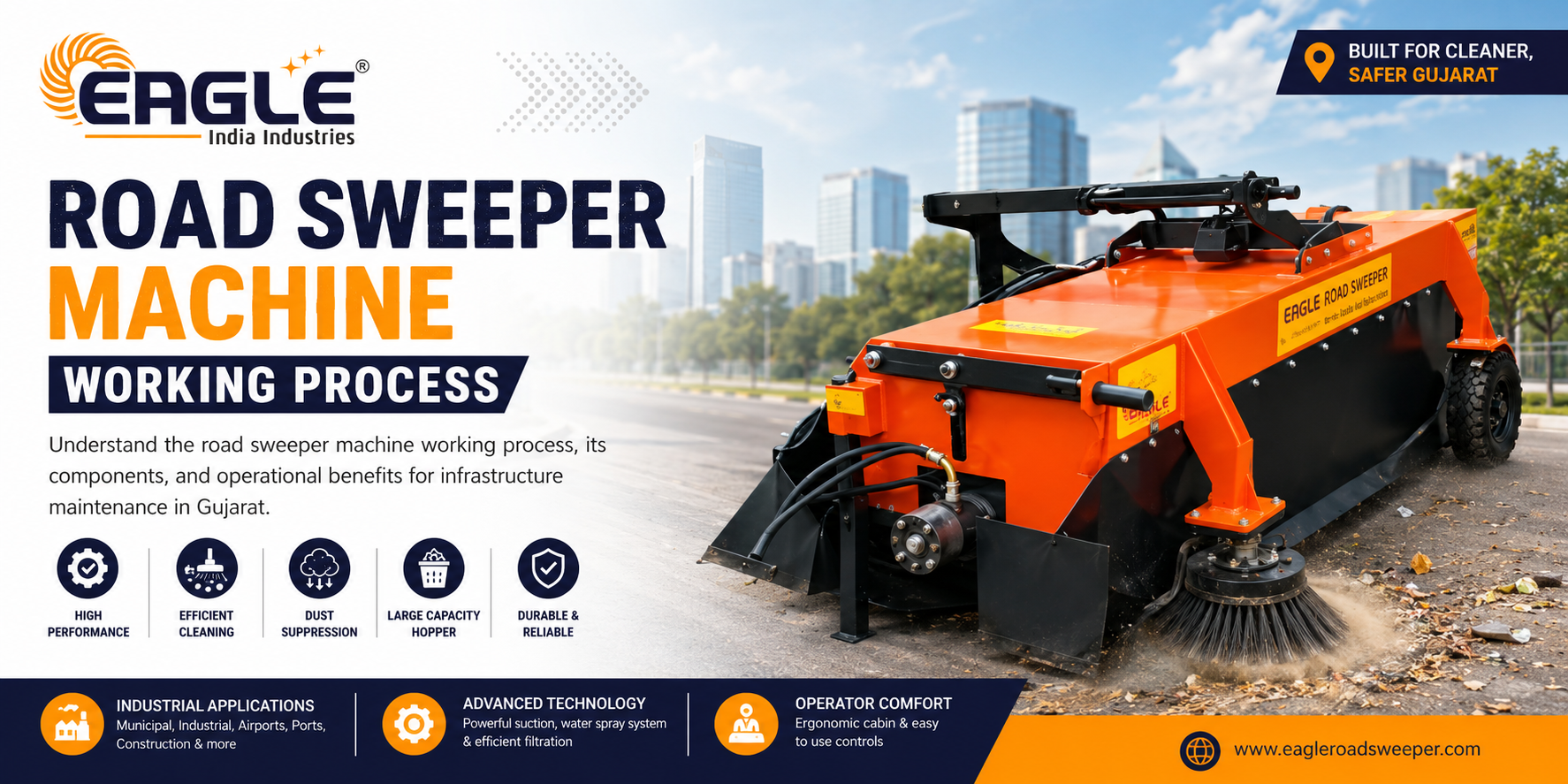
Road Sweeper Machine Working Process
Understand the road sweeper machine working process, its components, and operational benefits for infrastructure maintenance in Gujarat. Learn how these machine
Why This Matters in Gujarat
Gujarat's dynamic industrial landscape, extensive road networks, and growing urban centers demand robust infrastructure maintenance. From industrial estates in Ahmedabad and Surat to port areas and expanding smart cities, the accumulation of dust, debris, and waste is a constant concern. Efficient road sweeping directly supports public hygiene, reduces air pollution, and prevents drainage blockages, all crucial for sustaining Gujarat's economic growth and quality of life.
What is a Road Sweeper Machine — Overview
A road sweeper machine is a specialized vehicle engineered to collect debris, dust, and waste from roads, streets, and large paved surfaces. These machines operate through a combination of mechanical brushes, vacuum systems, and water sprayers, designed to dislodge, collect, and store various types of refuse. The fundamental road sweeper machine working process involves systematically cleaning surfaces, ensuring thorough removal of particulate matter and larger debris, which is then deposited into an onboard hopper for later disposal.
Key Features and Technical Specifications
Robust chassis design for demanding operational environments.
High-efficiency primary and secondary sweeping brushes for comprehensive coverage.
Powerful vacuum suction system for fine dust and particulate collection.
Integrated water spray system for dust suppression during operation.
Large capacity debris hopper for extended cleaning cycles.
Ergonomic operator cabin with intuitive controls for ease of use.
Advanced filtration systems to minimize exhaust emissions.
Durable construction materials for longevity and reduced maintenance.
Industrial Applications and Use Cases
- Municipal Roads and Streets: Regular cleaning of urban and suburban thoroughfares to maintain public hygiene and aesthetics.
- Industrial Estates and Factories: Sweeping large paved areas, parking lots, and production zones to control dust and debris.
- Logistics Hubs and Warehouses: Keeping loading docks, access roads, and storage areas free from dirt and packaging waste.
- Airport Runways and Aprons: Ensuring debris-free surfaces for aircraft safety and operational efficiency.
- Construction Sites: Post-construction cleanup of roads and access points to remove aggregates, dust, and construction waste.
- Mining and Quarry Operations: Managing dust and spillage on haul roads and processing areas.
- Port Facilities: Cleaning docks, container yards, and access roads to prevent contamination and maintain safety.
How to Choose the Right Road Sweeper Machine
Selecting the appropriate road sweeper machine involves evaluating several critical factors to match the equipment to specific operational needs.
- Sweeping Capacity and Hopper Volume: Assess the size of the areas to be cleaned and the volume of debris expected to determine the required sweeping width and hopper capacity.
- Brush System Configuration: Consider the type of brushes (main, side, gutter) and their material, suitable for the specific debris and surface types.
- Dust Suppression Technology: Verify the effectiveness of the water spray and vacuum filtration systems to control airborne dust during operation.
- Supplier Experience and Support: Choose a manufacturer or supplier with a proven track record, offering reliable after-sales service, spare parts availability, and technical assistance.
- Operational Efficiency and Fuel Economy: Evaluate the machine's fuel consumption and overall operational costs to ensure long-term economic viability.
- Safety Features and Ergonomics: Prioritize machines with advanced safety features for operators and ergonomic controls for comfortable, extended use.
- Customization Options: Determine if the supplier can tailor features like auxiliary power, specialized attachments, or specific paint finishes to meet unique project requirements.
Quality Standards and Compliance
Adherence to established quality standards and compliance regulations is paramount when procuring road sweeper machines. Buyers should verify that equipment meets relevant national and international standards, such as ISO certifications for manufacturing quality management. Specific standards related to vehicle emissions, noise levels, and operational safety, like those from the Bureau of Indian Standards (BIS) or other regional bodies, are also crucial. Ensuring compliance not only guarantees a reliable and safe product but also helps avoid potential regulatory issues and ensures long-term performance.
Why Company Experience and Capability Matters
When investing in industrial equipment like road sweeper machines, the experience and capability of the manufacturer are vital considerations. Eagle India Industries, established in 2019, has focused on developing a range of road sweeper machines designed for various applications across Gujarat. Our manufacturing process emphasizes robust construction and functional design, supported by a skilled technical team. We prioritize quality control at every stage, from material selection to final assembly, ensuring each machine meets operational demands
Conclusion
Selecting the right Road Sweeper Machine Working Process requires attention to technical suitability, build quality, supplier capability, maintenance needs, and long-term support. A clear comparison of these factors helps buyers choose equipment that fits real industrial requirements instead of relying on generic specifications alone.
Get In Touch
Eagle Roadsweeper / Eagle India Industries