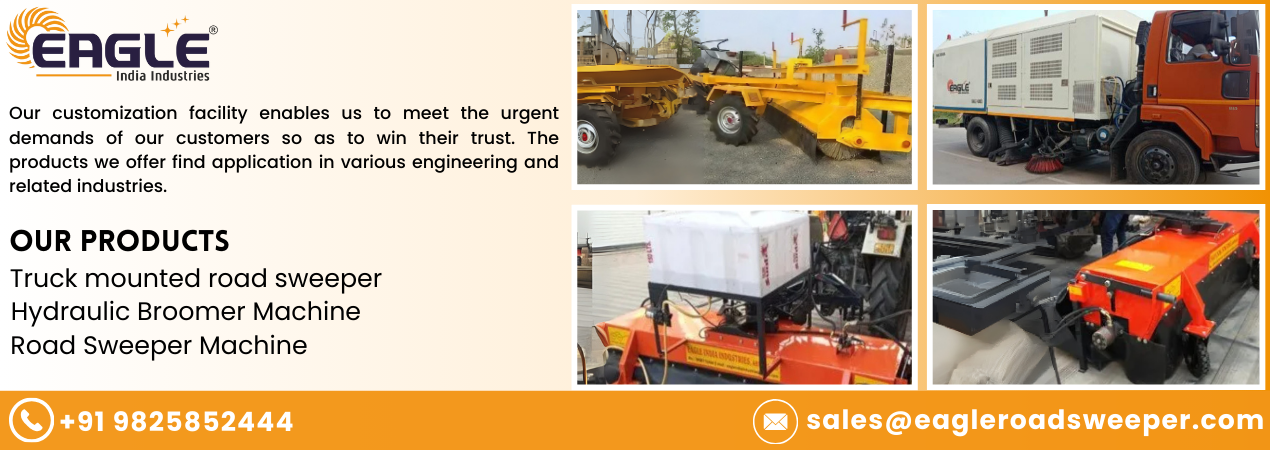
Introduction to Road Sweeper for Highways
A road sweeper for highways is engineered to keep expressways, national highways, and high-speed corridors clean with consistent results across long routes. These sweepers help remove sand, stones, litter, and fine dust from lanes, shoulders, medians, and toll approaches while supporting better visibility and safer driving conditions. Highway sweeping also helps reduce drain blockage, prevents debris build-up at kerbs, and improves the overall experience for commuters. Selecting the right sweeper depends on debris type, dust control needs, route length, and the preferred collection method. For model options, configuration guidance, and service support, visit the official Eagle Roadsweeper website.
Working Principle and Process Flow of Road Sweeper for Highways
Highway sweeping typically combines side brooms, a main broom, and either suction-based pickup or mechanical collection. Side brooms pull debris from kerbs and shoulders into the sweeping path, while the main broom loosens and conveys material toward the pickup zone. Vacuum highway sweepers use a high-performance fan and filtration system to capture fine dust, supported by water spray nozzles for dust suppression. Mechanical broom sweepers focus on heavier debris and aggregates, making them suitable for construction stretches and roadside build-up. This coordinated process reduces manual cleaning time and keeps highway operations efficient. Explore highway-ready configurations through the Eagle Roadsweeper portal.
Types of Road Sweeper for Highways
- Truck-mounted vacuum highway sweepers for fine dust removal on expressways, flyovers, and ring roads with higher dust control needs.
- Truck-mounted mechanical broom sweepers for highway lanes and shoulders where heavier debris, sand, and aggregates are common.
- Combination highway sweepers with broom plus suction for mixed debris conditions, balancing dust pickup and bulk collection.
- Water-spray dust suppression sweepers for dry regions, roadside construction zones, and seasonal dust peaks.
- Service-road and maintenance-yard sweepers for highway support areas, toll operations, and depot cleaning routines.
Key Features and Specifications of Road Sweeper for Highways
- Wide sweeping coverage that supports faster lane cleaning cycles across long highway stretches.
- Efficient hopper and unloading design to reduce stoppage time during route operations and shift schedules.
- Dust control support through water spray and filtration to help reduce airborne particles near traffic flow.
- Rugged broom assemblies and durable integration built for continuous highway maintenance conditions.
- Operator-friendly controls with safety-focused design to support stable sweeping performance on high-speed routes.
Applications of Road Sweeper for Highways
- Expressways and national highways use sweepers for routine cleaning to maintain lane clarity, reduce skidding risks, and support safer driving conditions.
- Toll plazas and approach roads deploy sweepers to remove litter and dust build-up, helping improve traffic flow and maintain cleanliness standards.
- Construction and road widening stretches use sweepers to manage loose aggregates and fine particles, supporting safer work zones and cleaner routes.
- Urban ring roads, flyovers, and high-traffic corridors use vacuum sweepers to control fine dust and improve visibility near dense traffic movement.
Benefits of Using Road Sweeper for Highways
- Improves road safety by reducing loose debris, dust clouds, and surface contaminants that can lower traction on high-speed routes.
- Enhances maintenance efficiency with consistent sweeping performance and reduced dependency on manual roadside cleaning.
- Supports dust control and cleaner surroundings, helping maintain better air quality along busy highway corridors.
- Helps extend pavement life by reducing abrasive particle build-up and supporting better drainage performance near shoulders and medians.
Top Manufacturers and Suppliers in India
Selecting a road sweeper for highways requires matching the sweeper type to debris load, dust control expectations, and operating route conditions. Vacuum sweepers are preferred for fine dust control, while mechanical broom and combination sweepers work well for mixed debris on long routes. While evaluating suppliers, compare sweeping width, hopper capacity, filtration performance, water spray support, spare availability, service network, and maintenance access. Reliable manufacturers also provide operator guidance and preventive maintenance practices to support consistent performance during demanding highway schedules. A structured selection approach helps ensure long-term results with predictable upkeep and efficient cleaning cycles.
Maintenance and Safety Tips
- Inspect side brooms, main broom wear, and brush angles regularly to maintain consistent pickup and avoid uneven sweeping lines.
- Clean filters, suction lines, hopper interiors, and spray nozzles on schedule to prevent dust leakage and reduced collection efficiency.
- Check hydraulic hoses, seals, and fittings frequently to reduce the risk of leaks during long highway route operations.
- Follow lane safety procedures and use proper warning indicators while sweeping near moving traffic and high-speed sections.
- Maintain a preventive service routine and keep essential spares ready to minimize downtime during highway maintenance cycles.
FAQs – Road Sweeper for Highways
Contact Details
Talk to our specialists today for tailored solutions and fast assistance.