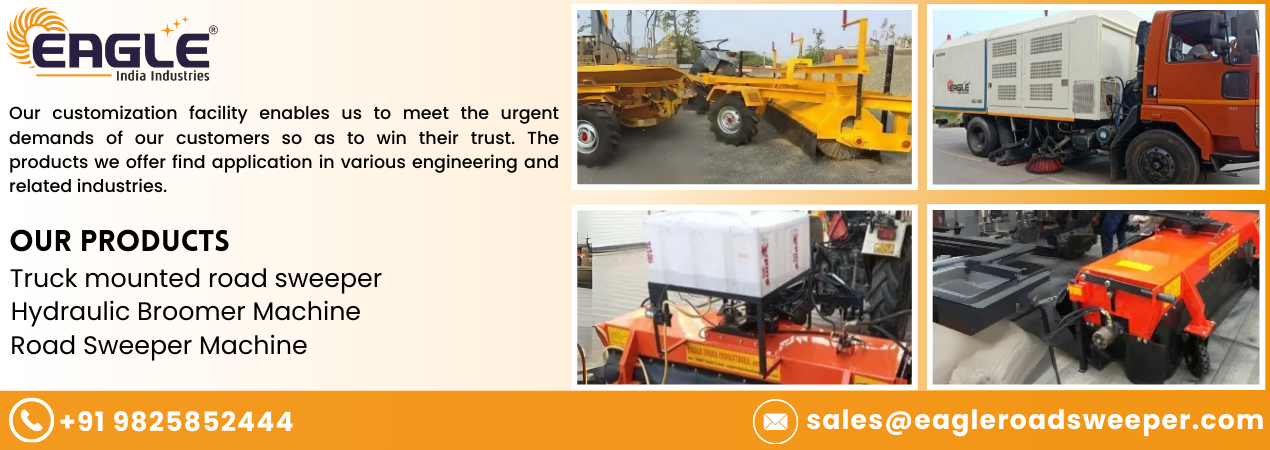
Introduction to Road Sweeper for Cities
A road sweeper for cities is built to keep urban streets clean, safe, and presentable across busy residential areas, commercial markets, smart-city corridors, and municipal road networks. City sweeping needs are different from highways because traffic density, tight turns, parking lanes, speed breakers, and mixed waste are common. A well-matched city road sweeper helps remove dust, leaves, plastic litter, sand, and fine particles from kerbsides and road edges while supporting cleanliness drives and better public hygiene. To explore urban street sweeping configurations and guidance, visit the official Eagle Roadsweeper website.
Working Principle and Process Flow of Road Sweeper for Cities
A city road sweeping machine uses a combination of side brooms and a main sweeping system to move debris from the kerb line into the collection path. Depending on the model, pickup happens through mechanical collection or vacuum suction supported by filtration. Water spray nozzles can be used to suppress dust while sweeping in dry conditions and high-traffic zones. The operator controls brush pressure, broom speed, and suction settings to suit road surface conditions, lane width, and debris type. This workflow supports efficient city cleaning with minimal disruption. Learn more through the Eagle Roadsweeper portal.
Types of Road Sweeper for Cities
- Compact street sweepers for narrow lanes, residential colonies, and congested market roads where maneuverability matters.
- Truck-mounted vacuum sweepers for urban main roads, flyovers, and ring roads with high dust load and fine particle pickup needs.
- Mechanical broom sweepers for mixed debris cleaning such as leaves, sand, and litter on city stretches and service roads.
- Combination sweepers with broom plus suction for balanced performance across different wards and seasonal debris conditions.
- Water spray dust control sweepers for dry city zones, construction routes, and areas requiring low airborne dust during sweeping.
Key Features and Specifications of Road Sweeper for Cities
- Compact body design and tight turning radius to handle urban junctions, parking lanes, and narrow ward roads.
- Efficient kerbside sweeping using side brooms to pull debris from edges, dividers, and footpath borders.
- Dust control setup with water spray and filtration support for cleaner sweeping near traffic and public areas.
- Operator-friendly controls with adjustable broom pressure and sweeping speed for consistent city cleaning quality.
- High-utility hopper design with easy unloading to reduce downtime during municipal route cycles.
Applications of Road Sweeper for Cities
- Municipal ward roads use city sweepers for daily and periodic cleaning to remove dust, litter, and seasonal debris from kerbsides and lane edges.
- Market areas and commercial streets deploy compact sweepers to manage high footfall waste and improve overall cleanliness and public hygiene.
- Smart city corridors and main roads use vacuum sweepers to control fine dust and maintain better visibility around high-traffic zones.
- Flyovers, bridges, and ring roads use sweepers to keep surfaces clean and reduce debris accumulation that can lead to drainage blockage.
- Construction-adjacent routes use sweepers to manage sand and fine particles, helping reduce dust spread into nearby residential zones.
Benefits of Using Road Sweeper for Cities
- Improves urban cleanliness with consistent kerbside sweeping, reducing visible litter and dust build-up across public roads.
- Supports public safety by removing loose debris that can cause skidding, especially near turns, speed breakers, and junctions.
- Helps improve air quality by controlling fine dust through suction filtration and water spray dust suppression systems.
- Reduces manual cleaning effort and speeds up municipal operations across multiple wards and daily sweeping schedules.
- Helps protect drainage lines by reducing silt and debris movement into stormwater drains during routine city cleaning cycles.
Top Manufacturers and Suppliers in India
Selecting a road sweeper for cities depends on route width, lane density, debris type, and dust control expectations. Municipal buyers and contractors typically compare sweeping width, suction performance, filtration, hopper volume, water spray capacity, turning radius, and ease of service. A dependable supplier should offer suitable configurations for compact lanes as well as main urban roads, along with operator training and spare support for consistent uptime. A structured selection approach helps ensure the city sweeper matches daily ward schedules and long-term maintenance requirements.
Maintenance and Safety Tips
- Inspect side brooms, main broom wear, and brush angles regularly to keep kerbside pickup consistent across city routes.
- Clean filters, suction ducts, and hopper areas on schedule to maintain strong dust control and reliable debris collection.
- Check water spray nozzles and water tank levels to avoid dust clouds in dry zones and high-traffic streets.
- Follow safe sweeping procedures near parked vehicles, pedestrians, junctions, and narrow roads to minimize operational risk.
- Maintain preventive servicing for hydraulic lines, bearings, and moving parts to reduce breakdowns during daily municipal duty cycles.
FAQs – Road Sweeper for Cities
Contact Details
Talk to our specialists today for tailored solutions and fast assistance.