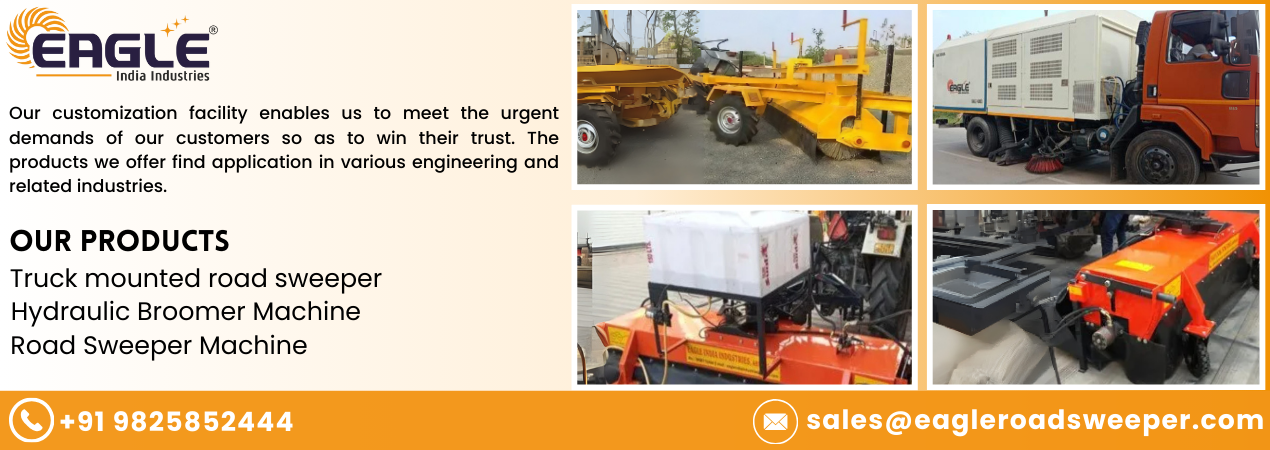
Introduction to Municipal Truck Road Sweeper
A municipal truck road sweeper is designed for daily city cleaning across wards, markets, industrial pockets, and main roads where dust, litter, and fine debris build up fast. Mounted on a truck chassis, it supports longer sweeping routes, higher hopper capacity, and quick shifting between zones without frequent unloading. Municipal teams use these machines to improve road hygiene, reduce airborne dust, and maintain cleaner public spaces with predictable cleaning schedules. For model options, route planning guidance, and working configurations, visit the official Eagle Roadsweeper website.
Working Principle and Process Flow of Municipal Truck Road Sweeper
A municipal truck road sweeper typically uses side brooms to pull debris from kerb edges and corners into the sweeping path. The main broom then collects heavier material, while a suction system or mechanical collection transfers the debris into a hopper. Water spray nozzles suppress dust during sweeping, and filtration supports cleaner exhaust air in vacuum models. Operators adjust broom pressure, water flow, and suction depending on road conditions, seasonal dust, and waste type. Explore municipal-ready configurations through the Eagle Roadsweeper portal.
Types of Municipal Truck Road Sweeper
- Truck-mounted mechanical broom sweepers for mixed litter and heavier debris on city roads, markets, and service lanes.
- Truck-mounted vacuum sweepers for fine dust control on main corridors, flyovers, and high-traffic municipal routes.
- Combination sweepers with broom plus suction for varied waste conditions, supporting both dust pickup and heavier debris handling.
- High-dump hopper sweepers for faster unloading into collection points, reducing downtime during multi-ward operations.
- Dust suppression sweepers with water spray for dry-season cleaning and construction-adjacent municipal roads.
Key Features and Specifications of Municipal Truck Road Sweeper
- High-capacity hopper and efficient unloading system to support long municipal routes with fewer interruptions.
- Side broom reach designed for kerb cleaning, corners, and road-edge waste collection in dense city areas.
- Dust suppression with water tank and controlled spray to reduce dust clouds and improve public comfort.
- Robust broom assembly and durable mounting for continuous daily operation in varied road conditions.
- Operator-friendly controls and safety indicators to support route management in traffic-heavy municipal environments.
Applications of Municipal Truck Road Sweeper
- Municipal city roads and ward routes use truck sweepers for scheduled cleaning to reduce roadside litter, improve hygiene, and support cleaner neighborhoods.
- Markets, commercial streets, and public areas deploy sweepers to manage daily dust and waste build-up, improving the overall cleanliness of high-footfall zones.
- Industrial pockets and logistics corridors use sweepers to remove fine dust and spillage, supporting safer movement and cleaner surroundings.
- Flyovers, ring roads, and arterial roads use vacuum sweepers to control dust and improve visibility near fast-moving traffic sections.
Benefits of Using Municipal Truck Road Sweeper
- Improves city cleanliness by removing dust, litter, and fine debris consistently across wards, reducing manual cleaning dependence.
- Supports public comfort by minimizing airborne dust through controlled water spray and filtration in vacuum sweeping systems.
- Enhances operational efficiency with faster route coverage, higher hopper capacity, and predictable daily cleaning schedules.
- Helps maintain safer roads by reducing loose debris near kerbs and junctions, lowering skidding risk and improving traction.
Top Manufacturers and Suppliers in India
Municipal truck road sweeper selection depends on route length, daily waste load, dust intensity, and the type of roads covered such as ward streets, main roads, flyovers, and commercial zones. Reliable suppliers offer mechanical broom, vacuum, and combination models with dust suppression and practical hopper unloading options. While comparing options, it is recommended to evaluate sweeping width, broom wear rate, filtration performance, water tank capacity, spare support, and service reach. A structured evaluation ensures the municipal sweeper matches daily operations, seasonal conditions, and long-term maintenance targets.
Maintenance and Safety Tips
- Check side brooms and main broom wear regularly and maintain correct angles for kerb cleaning and uniform pickup.
- Clean suction lines, filters, hopper seals, and spray nozzles on schedule to maintain dust control and consistent performance.
- Inspect hydraulic hoses, couplings, and fittings frequently to prevent leaks during long municipal sweeping routes.
- Follow lane safety practices with cones, warning lights, and route planning to reduce risk in traffic-heavy city areas.
- Maintain preventive servicing and keep essential spares ready to reduce downtime during daily ward operations.
FAQs – Municipal Truck Road Sweeper
Contact Details
Talk to our specialists today for tailored solutions and fast assistance.