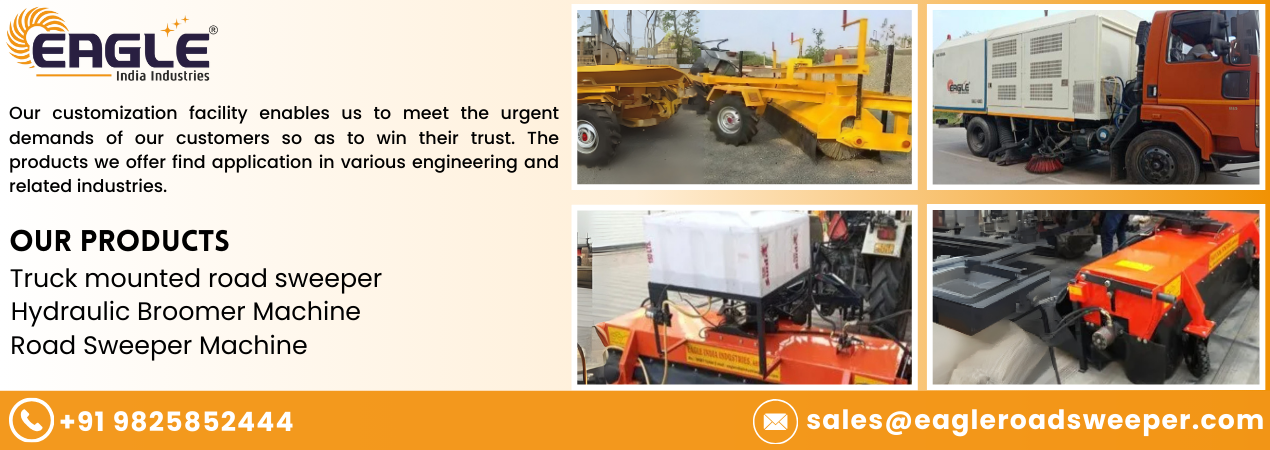
Introduction to Mechanical Truck Mounted Sweeper
A mechanical truck mounted sweeper is designed for dependable road cleaning where heavier debris, sand, and roadside litter must be collected efficiently. This sweeper category uses side brooms to pull material from kerbs and shoulders, and a central main broom that conveys debris into a hopper through a mechanical pickup system. Mechanical sweeping is widely preferred for municipal routes, industrial estates, highways, and construction corridors because it handles larger particles and delivers consistent results across long distances. For correct selection, route planning, and model guidance, visit the official Eagle Roadsweeper website.
Working Principle and Process Flow of Mechanical Truck Mounted Sweeper
A mechanical truck mounted sweeper works through a coordinated broom-and-conveyor approach. Side brushes guide debris inward while maintaining edge cleaning, and the main broom rotates to lift and push collected material toward the pickup zone. The debris is then transferred into the hopper through a mechanical collection mechanism, supported by a water spray system to reduce dust. Operators adjust broom pressure, sweeping angle, and water flow to match road conditions and debris loads. This workflow supports efficient sweeping cycles with minimal interruption. Explore practical configurations through the Eagle Roadsweeper portal.
Types of Mechanical Truck Mounted Sweeper
- Standard mechanical broom sweepers for city roads, service lanes, and industrial areas where sand and mixed debris are common.
- Heavy-duty mechanical sweepers for highway shoulders and long routes that demand higher hopper capacity and rugged broom assemblies.
- Compact mechanical sweepers for narrow streets, internal colonies, and parking zones where turning radius and maneuverability matter.
- Mechanical sweepers with enhanced dust suppression for dry regions and construction corridors with frequent fine dust generation.
- Mechanical sweeper builds with optional auxiliary brushes for medians and kerb-edge cleaning on wider roads.
Key Features and Specifications of Mechanical Truck Mounted Sweeper
- Mechanical broom pickup system built to collect heavier debris, sand, and roadside litter efficiently.
- Side broom and main broom layout for edge-to-center sweeping that improves kerb cleaning coverage.
- High-capacity hopper and unloading arrangement to reduce frequent stoppage on long sweeping routes.
- Dust suppression support with water spray nozzles and tank integration to control airborne particles during sweeping.
- Operator-friendly controls for broom pressure, brush angle, and route operation safety across varying road conditions.
Applications of Mechanical Truck Mounted Sweeper
- Municipal road cleaning programs use mechanical truck mounted sweepers to remove sand, leaves, and heavier debris from main roads and internal routes.
- Industrial estates deploy mechanical sweepers for routine cleaning of approach roads, loading zones, and internal logistics pathways to improve site hygiene.
- Highway shoulders and service lanes use heavy-duty mechanical sweepers for clearing gravel and debris build-up that can affect road safety.
- Construction corridors and road widening projects use mechanical sweepers to collect loose aggregates and keep routes safer for traffic movement.
- Ports, yards, and transport hubs use mechanical sweepers to manage mixed debris and reduce material spread across operational areas.
- Airports and large parking zones use mechanical sweepers for scheduled cleaning where consistent pickup performance is required.
Benefits of Using Mechanical Truck Mounted Sweeper
- Handles heavier debris effectively, making it suitable for sand, gravel, and roadside litter where vacuum-only systems may struggle.
- Improves route productivity through consistent sweeping cycles and hopper-based collection that reduces manual cleaning effort.
- Supports safer roads by reducing surface contaminants that can impact traction, braking, and visibility in busy corridors.
- Helps maintain cleaner surroundings by managing dust and debris accumulation near kerbs, medians, and shoulders.
- Reduces maintenance burden on road authorities by enabling planned sweeping schedules instead of reactive cleanup operations.
- Enhances the appearance of public and industrial spaces, supporting better cleanliness standards and operational efficiency.
Top Manufacturers and Suppliers in India
Mechanical truck mounted sweeper selection depends on route type, debris profile, sweeping width needs, hopper volume expectations, and dust suppression requirements. A structured evaluation typically includes broom durability, brush replacement accessibility, hydraulic reliability, water spray performance, operator ergonomics, and after-sales support. For long routes, hopper capacity and unloading efficiency play a major role in total productivity. For urban operations, turning radius and kerb cleaning performance become more important. Choosing the right configuration helps teams achieve consistent cleaning outcomes with predictable operating routines and reduced downtime.
Maintenance and Safety Tips
- Inspect side brooms and main broom wear regularly, and adjust broom pressure to avoid uneven sweeping and premature brush damage.
- Clean hopper, pickup zones, and chute areas routinely to prevent blockages and maintain steady debris transfer performance.
- Check hydraulic lines, fittings, and seals frequently to reduce leakage risk and ensure reliable broom actuation.
- Maintain water spray nozzles and tank cleanliness to improve dust suppression and avoid nozzle clogging during operation.
- Follow lane safety procedures, warning lights, and route protocols when sweeping near moving traffic or high-speed corridors.
FAQs – Mechanical Truck Mounted Sweeper
Contact Details
Talk to our specialists today for tailored solutions and fast assistance.