Introduction to Hydraulic Road Sweeper
A hydraulic road sweeper is designed for powerful, consistent cleaning where dust, loose particles, and heavy debris must be removed quickly from roads, industrial areas, and large paved surfaces. It uses hydraulic power to drive broom rotation, side brush movement, and sweeping functions with stable control during long working cycles. A well-selected hydraulic road sweeper supports faster route cleaning, reduces manual labour, improves surface safety, and helps keep work zones, highways, and municipal routes cleaner. For product options, mounting choices, and technical guidance, visit the official Eagle Roadsweeper website.
Working Principle and Process Flow of Hydraulic Road Sweeper
A hydraulic road sweeper operates through a hydraulic system that powers the sweeping mechanism, brush motors, and related functions based on the selected model. Side brooms guide debris from edges and corners into the sweeping path, while the main broom collects and moves dirt toward the pickup area. In dust-sensitive zones, water spray can be used to control fine particles during sweeping. The hydraulic setup delivers steady torque and smooth speed control, helping the sweeper maintain cleaning performance on uneven surfaces and high-debris routes. Explore suitable configurations through the Eagle Roadsweeper portal.
Types of Hydraulic Road Sweeper
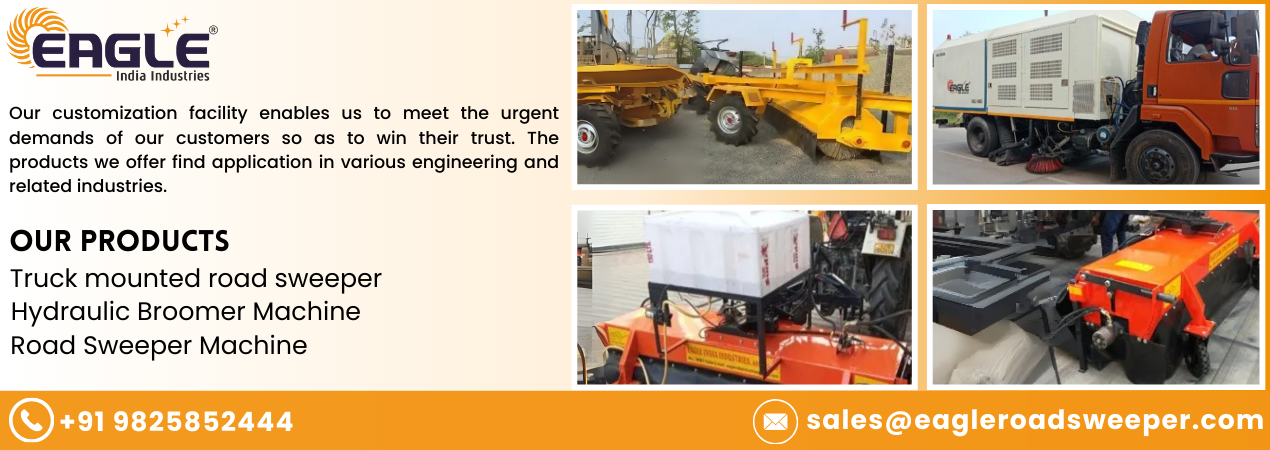
- Truck-mounted hydraulic road sweepers for city corridors, highways, and long route sweeping with higher output coverage.
- Tractor-mounted hydraulic sweepers for service roads, rural routes, and cleaning support in maintenance yards and industrial spaces.
- Skid-steer compatible hydraulic broom sweepers for warehouses, construction sites, and tight spaces requiring agile cleaning.
- Hydraulic angle broom sweepers for directional sweeping, edge cleaning, and pushing debris to a collection zone.
- Hydraulic sweeper systems with water spray support for dust control in dry regions and high-traffic areas.
Key Features and Specifications of Hydraulic Road Sweeper
- Hydraulic drive system provides strong torque and stable brush rotation for consistent sweeping in demanding conditions.
- Adjustable side brooms support corner cleaning and edge sweeping along kerbs, shoulders, and boundaries.
- Heavy-duty broom construction helps handle sand, gravel, and mixed debris without frequent brush failure.
- Operator-friendly control layout enables smooth adjustment of brush pressure, sweeping angle, and working speed.
- Dust suppression readiness with water spray integration helps reduce airborne particles and improves visibility.
Applications of Hydraulic Road Sweeper
- Highways, ring roads, and city routes use hydraulic road sweepers to remove dust, soil, and road debris to improve safety and cleanliness standards.
- Industrial estates and factory premises deploy sweepers for routine cleaning of paved surfaces, loading areas, and internal roads with heavy dust exposure.
- Construction zones and roadwork corridors use sweeping to manage loose aggregates and improve movement safety for vehicles and workers.
- Municipal cleaning operations use hydraulic sweepers for kerb-side dirt removal, market area cleaning, and seasonal dust control programs.
Benefits of Using Hydraulic Road Sweeper
- Delivers stronger sweeping performance with consistent hydraulic power, reducing uneven cleaning and missed debris patches.
- Improves operational efficiency by covering larger areas faster, lowering manpower dependency on routine cleaning tasks.
- Supports better dust control in busy routes and industrial sites, helping maintain cleaner surroundings and safer visibility.
- Helps reduce surface wear and blockages by clearing abrasive particles from roads, shoulders, and drainage edges.
Top Manufacturers and Suppliers in India
Hydraulic road sweeper selection depends on route conditions, debris type, mounting preference, and dust control requirements. Reliable suppliers provide multiple options such as truck-mounted sweepers, tractor-mounted sweepers, and hydraulic broom attachments with different sweeping widths and brush configurations. Before final selection, it is recommended to check build strength, hydraulic compatibility, brush durability, service support, and spare availability. A structured evaluation helps ensure the sweeper matches operating conditions, delivers steady performance, and remains easy to maintain over long-term use.
Maintenance and Safety Tips
- Inspect hydraulic hoses, fittings, and seals regularly to prevent leaks and maintain stable sweeping performance.
- Check broom wear, brush angles, and side broom alignment on schedule to keep cleaning coverage consistent.
- Clean filters, collection zones, and dust control nozzles frequently to avoid clogging and reduced pickup efficiency.
- Follow safe sweeping practices near traffic, use lane safety markers, and maintain proper visibility during operation.
- Use preventive maintenance routines and keep critical spares available to reduce downtime during route cleaning tasks.
FAQs – Hydraulic Road Sweeper
Contact Details
Talk to our specialists today for tailored solutions and fast assistance.